
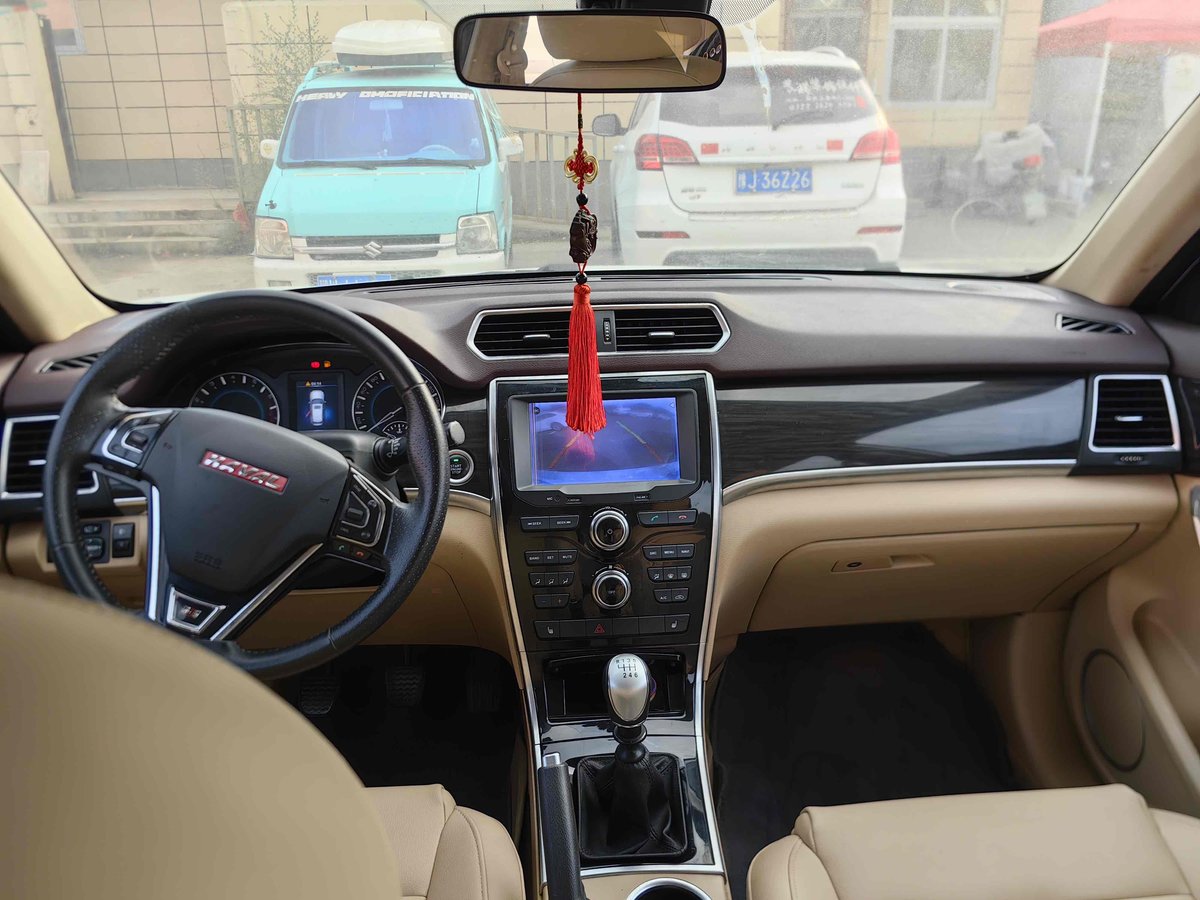
Unofficial specifications
Ignition TypeElectronic | Infotainment System7-inch Touchscreen Display |
Kerb Weight1400 kg | Length4335 mm |
Max Power148 HP | Max Torque210 Nm |
Mileage9.0 L/100 km | Number of Cylinders4 |
Number of Gears6 | Number of Seats5 |
Parking SensorsYes | Power SteeringYes |
Rear CameraYes | Seating Capacity5 |
Starting SystemPush Button Start | Suspension TypeIndependent Front, Torsion Beam Rear |
Top Speed170 km/h | Touchscreen7 inches |
Transmission6-Speed Automatic or 6-Speed Manual | Tyre Size225/65 R17 |
Tyre TypeAll-Season | Valve ConfigurationDOHC |
Valve Per Cylinder4 | Wheelbase2560 mm |
Width1814 mm | Color |
Model NameGWM Haval H2 | Compression Ratio9.5:1 |
CEO / MD Name | Variant |
Generation | SegmentSubcompact Crossover SUV |
Launch Year2014 | Engine ConfigurationInline |
Valves Per Cylinder4 | Engine AspirationTurbocharged |
Differential TypeOpen | Power to Weight (HP/ton)106.0 |
Mileage City (km/L)10.5 | Mileage Highway (km/L)12.0 |
Mileage Combined (km/L)11.0 | Battery Capacity (kWh) |
Spare Wheel TypeFull-size | DRLYes |
Fog Lamp TypeHalogen | Alloy WheelsYes |
Sunroof TypeElectric | Roof RailsYes |
ORVM TypeElectric Adjustable | Wiper TypeIntermittent |
Blind Spot MonitorNo | Keyless EntryYes |
Push Button StartYes | Digital Instrument ClusterYes |
Heads Up DisplayNo | Drive Modes |
Connected Car Features | OTA Updates |
Vehicle Warranty (Years)5 | Engine Warranty (Years)5 |
Battery Warranty (Years) | Ex-Showroom Price (USD)20000 |
Dimensions4335 x 1814 x 1695 mm | Acceleration 0-100 km/h12.5 seconds |
ABS (Anti-lock Braking System)Yes | Airbags6 |
Air ConditioningDual-zone Climate Control | Bluetooth ConnectivityYes |
Body TypeSubcompact Crossover SUV | Boot Space300 litres |
Brake TypeDisc | Climate ControlDual-zone Climate Control |
Clutch TypeManual or Automatic | Cooling SystemLiquid |
Cruise ControlYes | Displacement1.5L |
Drive TypeFront-Wheel Drive (FWD) | Emission StandardEuro 5 |
Engine Type4-Cylinder Turbocharged Petrol | Fuel Capacity55 litres |
Fuel SystemMulti-Point Fuel Injection | Fuel Tank Capacity55 litres |
Fuel TypePetrol | Gearbox6-Speed Automatic or 6-Speed Manual |
Ground Clearance133 mm | Headlight TypeHalogen |
Horsepower148 HP | Motor Power (kW) |
Motor Torque (Nm) | Charging Type |
Front SuspensionMacPherson Strut | Rear SuspensionTorsion Beam |
Steering TypeElectric Power Steering | Steering AdjustmentTilt |
Wheel Size (inch)17 | Driver Seat Adjustment6-way Power Adjustable |
Ventilated SeatsNo | Infotainment Screen (inch)7 |
Apple CarPlayYes | Android Auto |
Sound System BrandStandard | Number of Speakers4 |
Ambient LightingNo | EBDYes |
Traction ControlYes | ESCYes |
Hill HoldYes | ISOFIX MountsYes |
Camera TypeRearview Camera | Adaptive Cruise ControlNo |
Lane Keep AssistNo | Automatic Emergency BrakingNo |
Reviewer
Feb 21, 2026
Investigative Verdict: 3.5/5 | Evidence-Based Rating: 3.7/5
"You see, Watson, but you do not observe." Upon first laying eyes on the Haval H2, one might be reminded of a crime scene — deceptively ordinary at first glance, yet teeming with clues for the trained eye. The bold Haval badge, prominently displayed, suggests an ambition to compete against established Western and Japanese marques. Its substantial stance and high riding position betray the manufacturer's intent to offer an SUV that appears larger than its compact classification suggests. Panel gaps are uniformly tight, an indication of meticulous assembly, hinting at a pursuit of quality atypical for budget-oriented vehicles. The doors close with a solid "thud," a sound that speaks volumes of durability, and one that many more expensive vehicles fail to replicate. The game is afoot, Watson, as we delve deeper into what this vehicle truly offers beneath its unassuming exterior.
Exhibit A: Engine displacement and power figures reveal much about a vehicle's potential. The Haval H2 houses a 1.5-liter turbocharged engine producing 110 kW and 210 Nm of torque. While these numbers provide a promising overture, the real story is in the driving experience, where turbo lag before 2200 RPM exposes a gap in immediate response.
Exhibit B: Safety ratings are the unsung heroes of vehicular evaluations. The H2 boasts a 5-star ANCAP safety rating, achieved in 2017, a testament to its structural integrity and advanced safety features for its time, yet it remains a strong selling point.
Exhibit C: Fuel consumption data presents a dichotomy of expectation versus reality. Official figures suggest an average of 9.0L/100km—a figure more befitting a larger vehicle, suggesting potential inefficiencies in the powertrain.
Exhibit D: Interior technology, represented by a 7-inch infotainment screen, tells a tale of technological advancement that has since been overtaken by more modern rivals featuring larger, more integrated systems.
Exhibit E: The transmission, a 6-speed automatic, reflects an era now overshadowed by dual-clutch systems that offer smoother and quicker shifts, elucidating a gap in the H2's technological prowess.
Exhibit F: The vehicle's dimensions and boot capacity of 300 litres reveal its compact nature, suitable for urban environments while providing sufficient room for daily affairs.
Elementary, Watson — the moment I pressed the throttle, three facts became immediately apparent: the engine's reluctance below 2200 RPM, the transmission's contemplative demeanor, and the vehicle's commendable composure at speed. Each rattle and vibration during the drive was a whisper, a clue to its underpinnings. The steering, light yet precise, confessed its urban inclinations. Once at highway speed, the H2 displayed a surprising poise, its heft offering a planted feel, belying its modest proportions. Yet, the turbo lag before reaching its power band, a hesitation that might frustrate more spirited drivers, required a patient approach. The transmission, though smooth, was prone to occasional indecision, particularly when pressed for an urgent overtaking maneuver. This, Watson, is a vehicle that demands a relaxed pace, rewarding the deliberate and the considered over the urgent and the rash.
The Haval H2 stands firm in several areas, Watson. The build quality, with doors that close with a reassuring solidity, provides an impression of durability uncommon in its class. Its high seating position offers excellent visibility, allowing one to survey the road with confidence, a trait especially valued in urban settings. The ANCAP 5-star safety rating, although attained a few years ago, remains a commendable aspect, underscoring the vehicle's commitment to passenger safety. These attributes, Watson, form a robust defence for the H2, appealing to those who prioritize safety and practicality over sheer performance.
Yet, not all is without blemish, dear Watson. The turbo lag in the 1.5T engine is a glaring flaw, delaying power delivery until 2200 RPM — a delay that could prove vexing in scenarios demanding immediacy. Fuel consumption, averaging 9.0L/100km, stands as another piece of incriminating evidence, suggesting inefficiency where more frugal alternatives exist. The 7-inch screen, once a beacon of modernity, now seems diminutive against the expansive displays of rivals. The outdated 6-speed automatic, lacking the finesse of contemporary dual-clutch systems, further compounds the case against the H2's technological standing. These, Watson, are details the manufacturer hoped would escape the casual observer, but not the practiced eye of a detective.
In the crowded field of compact SUVs, the Haval H2 faces formidable adversaries. The Hyundai Kona, with its dynamic styling and efficient powertrains, commits the crime of offering compelling value. The Mazda CX-3, renowned for its engaging driving dynamics, presents a strong case for those seeking agility. Lastly, the Nissan Juke, with its unique design, captures the imagination of those who desire distinction. When you have eliminated the impossible, Watson, the remaining choice, however improbable, must be the truth. Among these, the H2 offers a more traditional approach, focusing on comfort and safety over flair and innovation.
The ideal driver for the Haval H2 can be deduced from several characteristics, Watson. This individual values reliability, as evidenced by the well-worn soles of their shoes, suggesting long commutes. They seek a vehicle offering safety reassurance, likely a parent prioritizing family security. Budget constraints may be present, as indicated by their frugal demeanor, yet they refuse to compromise on quality, appreciating the H2's solid build. This buyer requires precisely what the H2 offers: an affordable, safe, and durable solution for everyday transport.
The financial trail, Watson, is often the most telling. The Haval H2 commands a purchase price in the budget-friendly realm, making it an attractive proposition for those seeking value. Running costs, including insurance in Group 14 and tyre replacements around £80 each, keep expenses manageable. Service intervals at 15,000 km, with an average cost of £250, are reasonable but not the cheapest. Depreciation, however, presents a double-edged sword; while the initial investment is low, resale value may not hold as steadfastly as some competitors. Yet, for the budget-conscious buyer, this vehicle's affordability in the secondary market offers a reassuringly honest proposition.
"The case admits of only one explanation, Watson." The Haval H2, while not the most advanced or quickest in its class, stands as a testament to solid build quality and safety. For those seeking an affordable, reliable, and safe compact SUV, the H2 represents a sound choice. Its quirks, such as turbo lag and higher fuel consumption, are overshadowed by its strengths in build integrity and safety. The game is afoot, Watson, but now it is concluded — the H2 is guilty of being a sturdy, no-frills vehicle that serves its purpose admirably.
Share feedback or ask a question about this product.