
© 2026 Kossti. All rights reserved.
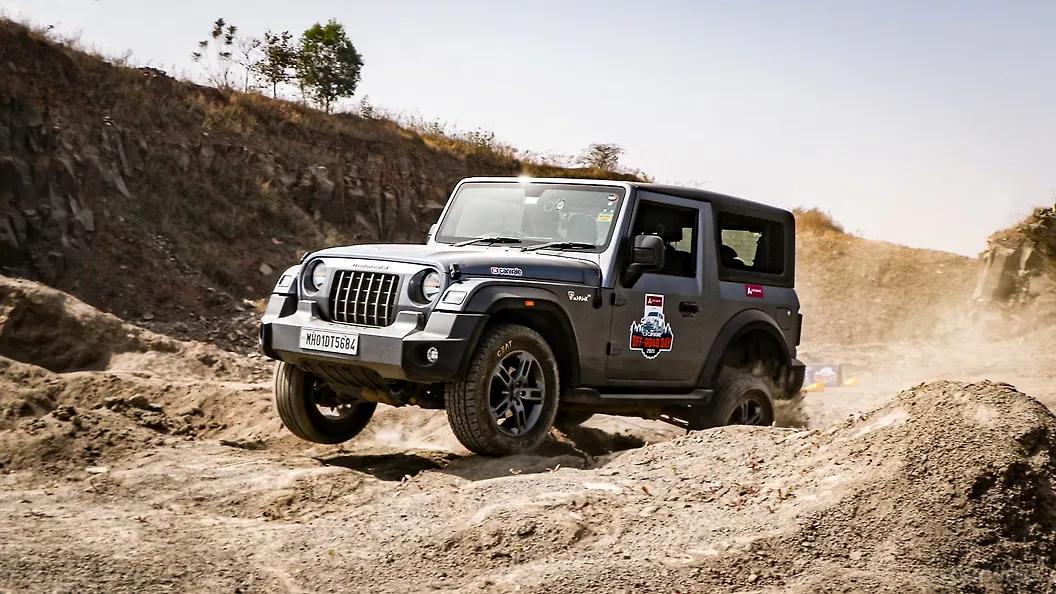
Unofficial specifications
Dimensions3985 x 1855 x 1844 mm | Acceleration 0-100 km/h6.5 seconds |
ABS (Anti-lock Braking System)Yes | Airbags2 |
Air ConditioningManual | Bluetooth ConnectivityYes |
Body TypeSUV | Boot Space607 liters |
Brake TypeDisc | Climate ControlNo |
Clutch TypeManual | Cooling SystemLiquid |
Cruise ControlYes | Displacement2184 cc |
Drive Type4WD | Emission StandardBS6 |
Engine TypeDiesel | Fuel Capacity57 liters |
Fuel SystemCommon Rail Direct Injection | Fuel Tank Capacity57 liters |
Fuel TypeDiesel | Gearbox6-speed Manual |
Ground Clearance226 mm | Headlight TypeHalogen |
Horsepower130 hp | Ignition TypeElectronic |
Infotainment System7-inch Touchscreen | Kerb Weight1850 kg |
Length3985 mm | Max Power130 hp |
Max Torque300 Nm | Mileage15 km/L |
Number of Cylinders4 | Number of Gears6 |
Number of Seats4 | Parking SensorsYes |
Power SteeringYes | Rear CameraYes |
Seating Capacity4 | Starting SystemElectric |
Suspension TypeIndependent Front and Multi-link Rear | Top Speed160 km/h |
TouchscreenYes | TransmissionManual |
Tyre Size255/75 R16 | Tyre TypeAll-Terrain |
Valve ConfigurationDOHC | Valve Per Cylinder4 |
Wheelbase2450 mm | Width1855 mm |
ColorRed | Model NameThar |
Compression Ratio17.0:1 | CEO / MD NameAnish Shah |
VariantLX Diesel 4WD | Generation2nd |
SegmentCompact SUV | Launch Year2020 |
Engine ConfigurationInline | Valves Per Cylinder4 |
Engine AspirationTurbocharged | Differential TypeManual Locking |
Power to Weight (HP/ton)70.27 | Mileage City (km/L)12 km/L |
Mileage Highway (km/L)18 km/L | Mileage Combined (km/L)15 km/L |
Battery Capacity (kWh) | Motor Power (kW) |
Motor Torque (Nm) | Charging Type |
Front SuspensionIndependent Coil Spring | Rear SuspensionMulti-link |
Steering TypePower Steering | Steering AdjustmentTilt |
Wheel Size (inch)16 | Spare Wheel TypeFull-size |
DRLYes | Fog Lamp TypeHalogen |
Alloy WheelsYes | Sunroof TypeNone |
Roof RailsYes | ORVM TypeManual |
Wiper TypeConventional | Driver Seat AdjustmentManual |
Ventilated SeatsNo | Infotainment Screen (inch)7 |
Apple CarPlayYes | Android AutoYes |
Sound System BrandArkamys | Number of Speakers4 |
Ambient LightingNo | EBDYes |
Traction ControlYes | ESCYes |
Hill HoldYes | ISOFIX MountsYes |
Camera TypeRear View | Adaptive Cruise ControlNo |
Lane Keep AssistNo | Automatic Emergency BrakingNo |
Blind Spot MonitorNo | Keyless EntryYes |
Push Button StartYes | Digital Instrument ClusterYes |
Heads Up DisplayNo | Drive Modes2 |
Connected Car FeaturesYes | OTA UpdatesYes |
Vehicle Warranty (Years)3 | Engine Warranty (Years)3 |
Battery Warranty (Years) | Ex-Showroom Price (USD)20000 |
Reviewer
Mar 18, 2026
Urban Commuter Rating: 3.5/5 | City Practicality Score: 3/5
In real-world urban stop-go conditions, the Mahindra Thar delivers a fuel economy of approximately 10.5 litres/100km. This is significantly higher than the WLTP urban figure, which is often more optimistic. For a typical annual city commute of around 15,000km, this translates to an annual fuel cost of about $2,200, assuming a fuel price of $1.50 per litre. While the Thar is equipped with an auto stop/start feature, it has limited impact in reducing fuel consumption during city driving, given the vehicle's weight and engine size.
The Mahindra Thar boasts a turning circle of 5.3 metres, which is quite large for a city car, making it less agile in tight urban spaces compared to smaller rivals. In terms of parking, you would need a minimum space of about 5.5 metres in length and 2.2 metres in width to park comfortably. Parallel parking can be challenging due to its size and visibility challenges, while the steering lock feedback is decent but not exceptional, making navigating through congested areas somewhat cumbersome.
Visibility from the driver's seat is a mixed bag; the A-pillars create notable blind spots at junctions, potentially obscuring cyclists and pedestrians. Rear visibility is adequate, aided by a rear parking camera that provides a clear image but lacks a wide-angle lens, limiting peripheral visibility. The parking sensor coverage is commendable, with both front and rear sensors alerting you to obstacles, though the camera's resolution could be better, especially in low-light conditions. Automatic parking assist is available but may require driver intervention in tight spots.
The Thar's transmission can feel somewhat clunky in heavy traffic, especially with the manual gearbox; the clutch is heavy and less forgiving during stop-go scenarios. The automatic variant offers a smoother experience but lacks the refinement of dual-clutch systems found in more urban-oriented vehicles. The ride quality can be firm, particularly over speed bumps and potholes, which are common in city driving. While seat comfort is reasonable for short trips, long periods of stationary driving can become uncomfortable, compounded by noticeable cabin noise from the road and engine.
The infotainment system in the Mahindra Thar supports Apple CarPlay and Android Auto, allowing for seamless smartphone integration. However, the interface can be somewhat laggy, and real-time traffic routing via Google Maps or Waze is not as intuitive as in competitors. Over-the-air map updates are offered, but they are not executed as efficiently as one might expect. In-traffic control requires multiple button presses, which can be distracting and inconvenient for urban driving.
Boot capacity in the Thar is relatively limited at 380 litres, making it less accommodating for larger shopping trips, especially when compared to smaller hatchbacks and SUVs. Underseat storage is minimal, and loading or unloading in tight street parking can be cumbersome due to the vehicle's height and weight. The rear seats do fold down to accommodate bulkier items, but the process can be awkward. Overall, it lacks the practicality that many urban drivers seek for daily tasks.
The Mahindra Thar falls into insurance group 20, which is moderate for an off-roader but can be higher than small city cars. Road tax/VED band places it in the higher bracket due to its emissions, making it less desirable for eco-conscious urban dwellers. The vehicle does not qualify for congestion zone exemptions or ULEZ compliance, which could lead to additional monthly charges depending on your city. Residential parking permits vary, but they are generally on the higher end due to the vehicle's classification. Additionally, tyre wear in city driving can be significant, necessitating more frequent replacements compared to lighter cars.
The Mahindra Thar holds some advantages for urban commuters, such as its rugged appearance and off-road capability, which can be appealing for those who venture outside the city on weekends. Its robust build can handle rough city roads better than many city-centric vehicles. Additionally, the large ground clearance can help navigate potholes without damage, and its distinct styling makes it stand out in a sea of typical hatchbacks.
However, the Thar also presents numerous frustrations for city driving. Its poor visibility can make navigating crowded streets stressful, while the firm ride quality exacerbates discomfort over bumpy roads. The limited boot space and awkward loading process hinder daily shopping trips, and the complex infotainment system can divert attention away from the road, increasing the potential for distractions. These factors combined may deter potential buyers who primarily drive in urban environments.
When considering alternatives, the Mahindra Thar faces tough competition from urban-focused vehicles such as the Mini Cooper, Honda Fit, and Peugeot 208. These competitors typically offer better fuel economy, more compact dimensions for easier parking, superior visibility, and advanced parking aids that enhance the city driving experience. Furthermore, they often provide a quieter ride and more user-friendly infotainment systems, making them more suitable for urban commuting.
In conclusion, while the Mahindra Thar offers a unique option for urban driving with its rugged design and off-road capability, it is not the most practical choice for daily city commutes. Its larger size, limited fuel efficiency, and visibility challenges may outweigh its benefits. For those primarily driving in the city, exploring smaller, more efficient rivals may yield a better daily driving experience.
Share feedback or ask a question about this product.