
© 2026 Kossti. All rights reserved.
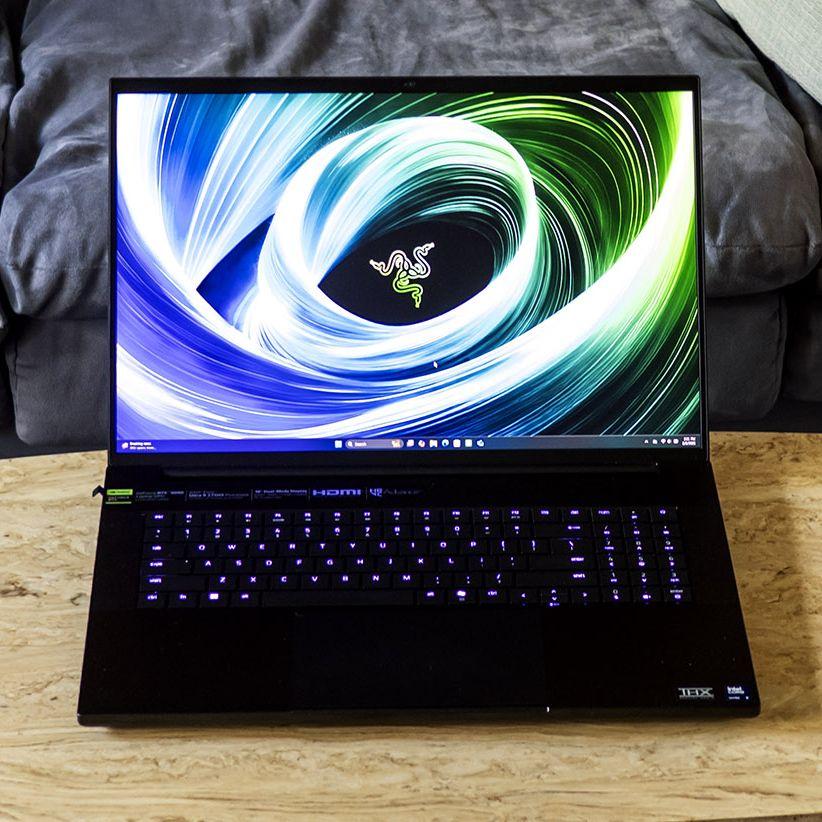
Unofficial specifications
3.5mm Audio JackYes | Audio QualityHigh Definition |
Available ColorsBlack, Mercury White | Battery Capacity99 Wh |
Battery TypeLithium-Ion | Bluetooth Version5.2 |
Build MaterialAluminum | Camera Features720p HD Webcam |
Charging Speed230W | ChipsetIntel HM670 |
Clock FeatureN/A | Device TypeGaming Laptop |
Dimensions15.55 x 11.0 x 0.78 inches | Display CharacteristicsAnti-glare, 100% sRGB |
Display TypeIPS LCD | Operating SystemWindows 11 Home |
Processor Speed2.4 GHz | RAM32GB |
Refresh Rate240 Hz | Resolution2560 x 1600 |
Screen Size18 inches | SensorsAmbient Light Sensor |
Special FeaturesPer-key RGB Chroma Keyboard | Standby TimeUp to 10 hours |
Storage Capacity1TB SSD | Weight6.39 lbs |
Wireless ChargingNo | Body TypeClamshell |
Cooling SystemRazer Vapor Chamber | TouchscreenNo |
HDMI Ports1 | USB Ports3 x USB Type-A, 1 x USB Type-C |
Backlit KeyboardYes | Graphics CardNVIDIA GeForce RTX 4080 |
Processor BrandIntel | Processor Generation13th Gen |
Processor Modeli9-13900H | Screen Resolution2560 x 1600 |
BrandRazer | Model NameRazer Blade 18 |
Model NumberRZ09-0487 | Product DescriptionHigh-performance gaming laptop with a sleek design. |
Warranty1 Year Limited Warranty | Audio Jack3.5mm |
Display Size18 inches | Ram32GB |
Wifi SupportWi-Fi 6E | Usb TypeUSB Type-A, USB Type-C |
Battery99 Wh | Gpu TypeDedicated |
Storage1TB SSD | Cpu TypeIntel Core i9 |
dup3434N/A | Cooling TechnologyVapor Chamber Cooling |
Frequency (Hz)240 Hz | App ControlRazer Synapse |
dupllN/A | Processor Cores14 |
Processor Threads20 | RAM Speed4800 MHz |
RAM Slots2 | RAM ExpandableYes, up to 64GB |
Storage InterfacePCIe NVMe | Storage ExpandableYes, via M.2 slot |
Graphics VRAM12GB GDDR6 | Display Touch SupportNo |
EthernetGigabit Ethernet | Thunderbolt VersionThunderbolt 4 |
SD Card ReaderYes | Keyboard LanguageEnglish (US) |
Build StandardMIL-STD-810H |
Reviewer
Apr 20, 2026
When I first laid my hands on the Razer Blade 18, I was excited. The hype surrounding it promised a powerful laptop that would elevate my gaming and productivity to unprecedented heights. However, as soon as I powered it up and delved into its features, I began to feel that something was just off. I really wanted to believe the marketing; there’s something electric about their branding that screams premium. But I quickly realized that the allure of sleek curves and RGB lighting didn’t fully mask the shortcomings lurking beneath.
I was so annoyed when the lag set in during what should have been a smooth gaming session. You know those moments? When you’re at a critical point in your game, and suddenly everything freezes? Yeah, that happened more than once. Not exactly what one expects from a machine with such high-end components!
The first thing that struck me about the build quality was its weight; it's hefty but feels premium, wrapped in sturdy aluminum. But then reality hit me like a ton of bricks. After only a few weeks of use, I found tiny dents on the surface from casual handling—definitely not what I'd expect for several grand! For this price, I expected better protection against everyday wear and tear.
Also, I noticed an annoying creak when tilting the screen back too far. This made me feel uneasy every time I opened it up for work or gaming. It’s disappointing because every other aspect of design seemed well thought out... except this glaring oversight.
Let’s dive into performance—it started strong with quick boot-up times and buttery smooth transitions between apps. Then came the big letdown when running demanding software; the cooling system couldn’t keep up during heavier tasks. I'm talking about significant throttle issues while rendering videos or during long gaming stints.
I felt genuinely frustrated by these performance drops because here I was trying to harness this beast of a device, only to be met with stuttering frames when engaged in high-spec titles or graphic-intensive applications. It left me feeling tricked—like all those dazzling benchmarks they marketed were deceivingly optimistic.
The Razer Blade 18 isn't cheap—I mean, it costs more than some used cars! Given its price tag, I'd hoped for consistency across all aspects: build quality, performance, battery life—you name it. But after spending hard-earned cash on this machine, reality set in when the charge dwindled faster than expected during regular use.
You start weighing your choices: fancy specs versus real-world usage, asking yourself if you're actually getting your money's worth. If you’re caught between disappointing battery life and overpriced parts, it can leave you feeling downright cheated.
Let’s balance things out because it wasn’t all doom and gloom! The display on this thing is stunning—a vibrant OLED panel that popped with colors in every content category I tried! Watching movies or playing games made me smile ear-to-ear; it's immersive! That's one feature they absolutely nailed.
Additionally, once everything is up and running smoothly after tweaking settings post-purchase (because good luck understanding built-in profiles), multitasking does shine thanks to impressive RAM options—they got that part right!
In summary, living with the Razer Blade 18 has been a sense of love-hate tension. There are moments of sheer delight when everything works as intended but frequent frustrations cloud my experience regularly enough to warrant doubt about its value.
You have stellar potential trapped inside an overexcited marketing facade crying for refinement—whether it’s build durability or consistency under pressure, something needs fixing here. True beauty lies in reliability; alas, this beauty often falls short where it matters most!
Share feedback or ask a question about this product.