
Reviewer
Aug 29, 2026
Chatrak (Mushrooms) is a 2011 Bengali arthouse drama directed by acclaimed Sri Lankan filmmaker Vimukthi Jayasundara. Bold, unconventional and surrounded by controversy, the film became one of the most talked-about Bengali movies of its time. It received international recognition after being selected for the Directors’ Fortnight at the 2011 Cannes Film Festival, but back home much of the attention centered on its explicit adult content and Paoli Dam’s fearless performance.
The story follows Rahul, a Bengali architect who returns to Kolkata after spending years working in Dubai. He comes back at a time when the city is experiencing rapid construction and urban expansion. After returning, Rahul reunites with his girlfriend, played by Paoli Dam, but their relationship is only one part of the complicated life waiting for him.
Rahul is also searching for his missing brother, who is believed to have become mentally unstable and abandoned conventional society. He has disappeared into the forest, where he reportedly sleeps among the trees, survives close to nature and develops a strange connection with a soldier he encounters there.
Rahul and his girlfriend eventually set out to find him. What begins as a search for a missing brother gradually becomes something much more unusual. Through the two brothers, the film presents two completely different worlds: Rahul belongs to the world of buildings, development and modernization, while his brother has almost entirely rejected civilization and escaped into nature.
This contrast is one of the most interesting elements of Chatrak. As new construction transforms Kolkata, the film also shows people being displaced by development. Beneath its unusual characters and intimate relationships lies a darker examination of loneliness, urbanization, alienation and the price people sometimes pay for progress.
Despite its success on the international festival circuit, Chatrak became widely discussed in India for another reason: its nudity, intimate scenes and unusually explicit adult content.
Such direct representation was uncommon in Bengali cinema at the time, and the film quickly generated controversy. The discussion became even more intense after explicit material associated with the movie circulated online.
As a result, many people who knew little about the film's international recognition suddenly became familiar with Chatrak because of its controversial scenes. There is an interesting irony here: international audiences encountered it primarily as an experimental festival film, while many Indian viewers first heard about it because of the controversy.
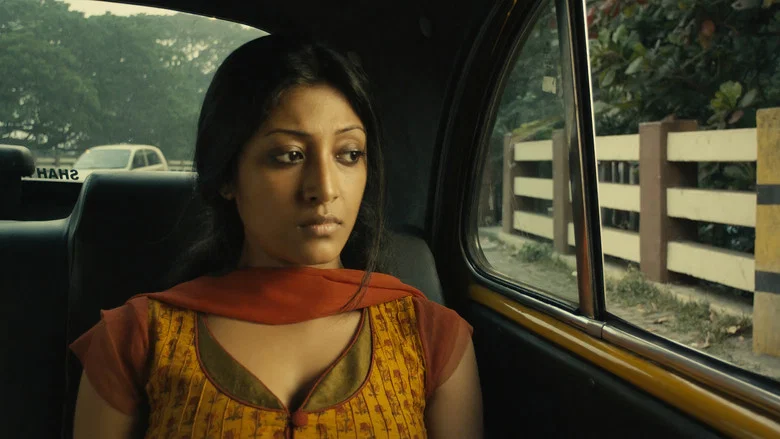
Paoli Dam is undoubtedly the most talked-about performer in Chatrak. She accepted a role requiring a level of physical and emotional vulnerability that was extremely unusual for a leading Bengali actress at the time.
Her bold scenes attracted enormous attention, but reducing her performance to nudity alone would be unfair. Her character is filled with desire, loneliness, frustration and uncertainty. She is trying to reconnect with Rahul after years of separation while dealing with the emotional complications surrounding their relationship.
Paoli commits completely to the director's uncompromising vision. Whether viewers appreciate the film or not, it is difficult to deny the risk involved in accepting such a demanding role. Chatrak consequently remains one of the boldest and most controversial performances associated with her career.
Although Chatrak was screened internationally, its uncensored form faced obvious difficulties when it came to conventional theatrical exhibition in India. The film's nudity and explicit adult material created censorship and certification concerns, and the festival version did not receive the same kind of mainstream theatrical exposure in India.
This eventually added to the movie's reputation. Instead of being remembered simply as a Cannes-selected Bengali arthouse film, it became widely known as the controversial Paoli Dam movie that pushed the boundaries of what audiences were accustomed to seeing in Bengali cinema.
Calling Chatrak simply an erotic movie misses much of what the director is trying to accomplish. Yes, sexuality and nudity are significant elements of the film, but they exist within a larger story about isolation, relationships, psychological instability, displacement and modernization.
Vimukthi Jayasundara uses a slow and atmospheric filmmaking style. There are isolated locations, long silences and scenes that intentionally make the viewer uncomfortable. This is far removed from conventional commercial Bengali cinema.
The contrast between Rahul's construction-driven urban world and his brother's almost primitive existence in the forest is particularly striking. One brother is helping construct the modern city, while the other has abandoned that world almost completely.
Chatrak is strange, provocative, artistic and deliberately uncomfortable. It certainly isn't a movie for everyone. Viewers expecting a conventional romantic or commercial Bengali film may find its pacing and storytelling difficult. However, audiences interested in experimental and festival cinema may discover considerably more beneath its controversial reputation.
Paoli Dam's fearless performance deserves attention because she took on a character that demanded both emotional and physical vulnerability. The explicit scenes may have generated the headlines, but they are not the entire film.
Behind the controversy, Chatrak is ultimately a film about people becoming disconnected—from relationships, from society, from the rapidly changing city around them and, perhaps, from themselves.
More than a decade after its release, the film still generates curiosity because of the unusual position it occupies in Bengali cinema: internationally recognized, artistically unconventional and intensely controversial.
Movie: Chatrak (Mushrooms)
Year: 2011
Director: Vimukthi Jayasundara
Language: Bengali
Genre: Arthouse / Erotic Drama
Starring: Paoli Dam, Sudip Mukherjee, Tomas Lemarquis
Festival Recognition: Directors’ Fortnight, Cannes Film Festival 2011
Recommended For: Mature audiences and arthouse cinema viewers
This structure is better for **one movie-review post**: one H1, a strong opening, story + controversy + Paoli Dam + theatrical-release discussion, then one final verdict and movie information.
Share feedback or ask a question about this product.