
Reviewer
Aug 29, 2026
Gandu is a 2010 Indian Bengali art drama directed by Qaushiq Mukherjee, better known as Q. With its black-and-white cinematography, Bengali rap, unconventional editing, explicit language and adult themes, the film challenged almost every convention associated with mainstream Bengali cinema.
Gandu was made in Kolkata on a very limited budget with a crew of only eight people. Almost the entire film was shot in black and white, giving it a dark, raw and rebellious visual identity. Instead of becoming a limitation, its small crew, low-budget production and unconventional filmmaking style became some of the movie’s defining strengths.
The film also attracted attention on the international festival circuit. At home in India, however, much of the discussion surrounding Gandu focused on its explicit language, nudity and sexual content. This combination of international recognition and domestic controversy eventually turned Gandu into one of the most talked-about Bengali independent films of its era.
The movie follows a frustrated young man whom everyone simply calls Gandu. He is lonely, angry and deeply dissatisfied with his life. He has no stable job or clear direction and spends much of his time stealing money, buying lottery tickets, taking drugs and expressing his frustration through Bengali rap.
Gandu’s biggest problem is not simply poverty. He seems unable to find meaning in his own existence. He lives within society but feels completely disconnected from it. People around him ridicule him, and almost nobody appears interested in understanding his frustration, creativity or ambition.
Rap becomes the one place where Gandu can express himself freely. The anger, sexual frustration, humiliation and dreams that he struggles to communicate in everyday life explode through his lyrics.
His repetitive existence begins to change when he meets a cycle-rickshaw driver known as Ricksha. The eccentric, Bruce Lee-loving rickshaw driver eventually becomes one of Gandu’s only genuine friends.
Their unusual friendship brings moments of humor and companionship into an otherwise bleak world. As their journey continues through drugs, fantasies and strange encounters, the boundary between Gandu’s imagination and reality becomes increasingly difficult to identify.
Gandu does not follow a traditional storytelling structure. Viewers looking for a clear beginning, middle and conclusion may find the film challenging.
Instead, Q presents fragments of Gandu’s life—his routine, anger, fantasies, humiliation, sexuality and desire to become something more than the person everyone believes him to be.
This makes Gandu less of a conventional plot-driven movie and more of a study of a deeply alienated young man.
In many ways, the protagonist represents a person who exists within society but cannot find a meaningful place inside it. His days repeat themselves, his opportunities appear limited, and music becomes one of the few ways he can assert his identity.
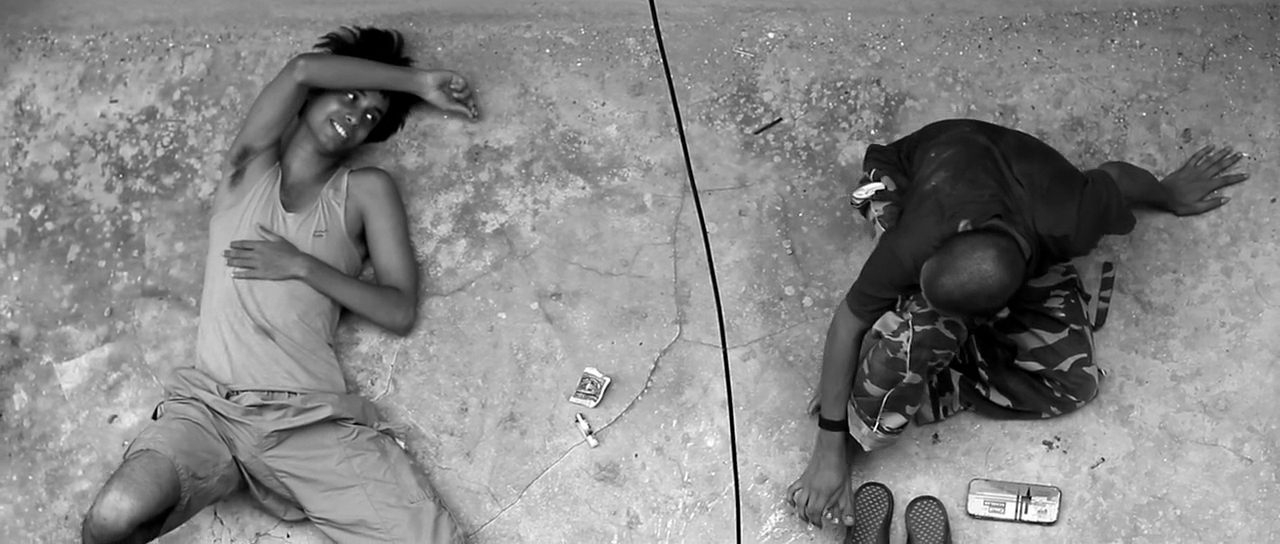
One of the most distinctive features of Gandu is its almost entirely black-and-white cinematography.
The absence of color works particularly well with the protagonist’s psychological state. Gandu’s world feels drained of hope, stability and conventional beauty, and the monochrome photography reinforces that feeling.
The camera frequently feels restless. Framing can appear deliberately rough, while rapid and fragmented editing adds to the sense of instability.
Instead of presenting Gandu’s world from a comfortable distance, the visual style often makes viewers feel as disoriented as the protagonist himself.
The movie also makes limited use of color, making those moments stand out dramatically against the monochrome world surrounding them.
Music is not simply background entertainment in Gandu. Rap is essentially Gandu’s true voice.
He expresses through lyrics what he struggles to communicate to the people around him. His songs are angry, provocative, vulgar and filled with frustration.
As a result, the music provides an important window into the protagonist’s personality. At times, viewers may understand Gandu more clearly through his lyrics than through his conversations.
The alternative rock and rap-driven soundtrack gives the entire movie a rebellious energy and helps separate it from conventional Bengali drama.
Gandu became highly controversial because of its explicit language, nudity and graphic adult content. Its approach to sexuality was far more direct than audiences were accustomed to seeing in mainstream Bengali or Indian cinema at the time.
The controversy became so intense that some viewers reportedly walked out during sexual scenes at screenings. The controversy also contributed to the film not receiving its first public screening in India until 2012.
For some viewers and critics, the movie represented artistic freedom and a refusal to accept the restrictions of mainstream Indian cinema. For others, its explicit material crossed the line from artistic provocation into unnecessary shock.
That disagreement raises one of the most interesting questions surrounding Gandu: where does deliberate shock end and legitimate artistic expression begin?
Rii Sen plays multiple roles in the film and became closely associated with some of its most daring and controversial sequences.
Her presence moves between Gandu’s reality, imagination and desire, making her more than simply a conventional supporting character.
Although the explicit nature of some scenes attracted enormous attention, focusing exclusively on them overlooks her broader function within the film. Q uses her presence to explore Gandu’s fantasies, sexuality and psychological search for escape.
Her fearless commitment to the material also contributed significantly to the provocative identity of the film.
Anubrata Basu is one of the movie’s greatest strengths. His performance as Gandu rarely feels traditionally theatrical.
His frustrated facial expressions, restless body language and rap performances create a protagonist who feels raw and unpredictable.
He successfully captures Gandu’s anger, loneliness, anxiety and sense of being trapped inside his own existence. The result is a character who may not always be likable but remains difficult to ignore.
Joyraj Bhattacharjee is equally memorable as Ricksha. His unusual personality, fascination with Bruce Lee and friendship with Gandu add humor and unexpected warmth to the film.
No. Describing Gandu only as an adult or erotic movie greatly oversimplifies the film.
Explicit sexuality is certainly part of the movie, but Gandu also explores alienation, frustration, sexual repression, class limitations, loneliness, creative ambition and the desire to escape an apparently meaningless existence.
The controversial scenes exist within this larger portrait of an angry young man struggling to understand what he wants from life.
Whether every provocative scene successfully contributes to those ideas is open to debate, but there is considerably more happening in Gandu than its controversial reputation suggests.
The filmmaking is deliberately raw and unconventional. Fragmented storytelling, sudden cuts, dreamlike sequences, restless camerawork, aggressive language and musical interludes create a film that rarely allows its audience to become comfortable.
For some viewers, this is exactly what makes Gandu fascinating. For others, the emphasis on style can overwhelm the relatively thin narrative.
But discomfort appears to be part of Q’s intention. A polished and conventional presentation would arguably feel completely disconnected from Gandu’s chaotic personality and environment.
This is perhaps the biggest debate surrounding Gandu.
Supporters see the movie as an important example of fearless Indian independent filmmaking—a film created with limited resources that refused to follow mainstream expectations and still managed to gain international attention.
Critics, however, have questioned whether some of its shock value overwhelms its deeper social or artistic ideas. The portrayal of women, explicit sexuality and intentionally confrontational style have all generated criticism.
Both reactions are important to understanding the film. Gandu does not appear interested in providing viewers with comfortable answers. Instead, it deliberately creates questions about censorship, obscenity, artistic freedom and the limits of representation in Indian cinema.
Viewers looking for a conventional Bengali romance, family drama or straightforward commercial movie will probably find Gandu difficult and potentially uncomfortable.
However, audiences interested in experimental cinema, independent filmmaking, black-and-white photography, unconventional editing, underground music and rebellious storytelling may find plenty to explore.
Gandu is not designed to please everyone. In many ways, it seems deliberately designed to challenge its audience.
Gandu is not a beautiful film in the conventional sense—and it clearly has no interest in becoming one.
It is raw, vulgar, aggressive, occasionally funny, deeply frustrating and, at certain moments, surprisingly poetic. Its black-and-white cinematography, Bengali rap soundtrack and fragmented narrative created something highly unusual within Bengali cinema.
The explicit content certainly helped make Gandu infamous, but remembering the movie only for its controversial scenes would ignore what makes it genuinely interesting: its determination to create its own cinematic language.
For some viewers, Gandu will remain a daring piece of underground art. For others, it will feel like unnecessary provocation disguised as experimentation.
Either way, one thing is difficult to deny: very few Bengali films have challenged the boundaries of mainstream Indian cinema as aggressively as Gandu.
Movie: Gandu
Release Year: 2010
Director: Qaushiq Mukherjee (Q)
Country: India
Language: Bengali
Genre: Art Drama / Experimental / Independent Cinema
Running Time: 85 minutes
Starring: Anubrata Basu, Joyraj Bhattacharjee, Kamalika Banerjee, Silajit Majumder and Rii Sen
Music: Five Little Indians
Known For: Black-and-white cinematography, Bengali rap, experimental editing and controversial adult content
Recommended For: Mature audiences and viewers interested in experimental and arthouse cinema
Gandu was directed by Bengali filmmaker Qaushiq Mukherjee, better known as Q.
Gandu is a 2010 Bengali film. It made its international premiere in New York in October 2010.
Yes. Gandu was filmed almost entirely in black and white, with very limited use of color. The monochrome cinematography is one of the movie’s most recognizable visual characteristics.
Gandu became controversial because of its strong language, nudity, explicit sexual content and confrontational filmmaking style. Its depiction of sexuality went significantly beyond what mainstream Bengali audiences were accustomed to seeing at the time.
The controversy surrounding the film complicated its public exhibition in India. Although it had already appeared internationally, its first public screening in India did not take place until 2012 at the Osian Film Festival.
No. Although the movie contains explicit adult material, its broader themes include loneliness, urban frustration, sexual repression, class, creative ambition, alienation and the search for identity.
No. Gandu is an experimental independent film with an unconventional narrative, raw visual style and provocative subject matter. It is very different from traditional commercial Bengali cinema.
The factual details about its 2010 international premiere, 85-minute runtime, Bengali language, cast and festival appearances come from your supplied source. The source also specifically documents the controversy surrounding its language and explicit content and notes that its first public Indian screening came in 2012.
Share feedback or ask a question about this product.